
Virtual public exhibitions for planning: how to replace the village hall
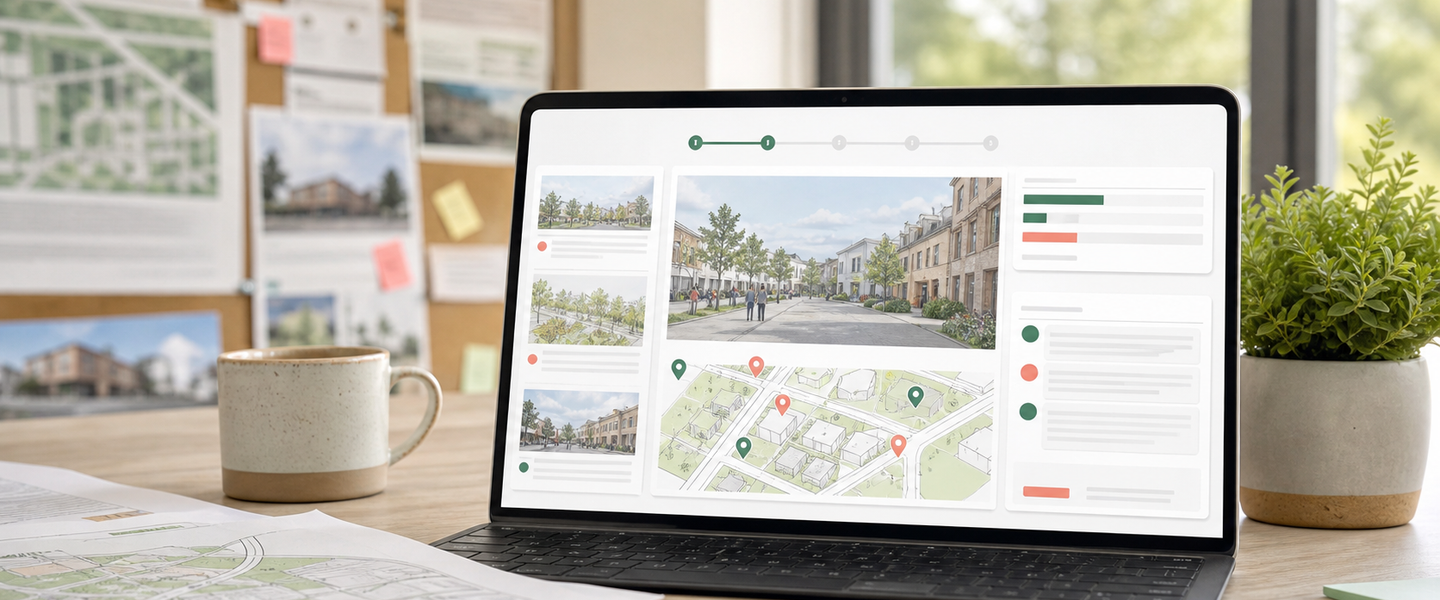
The public exhibition has been a cornerstone of planning consultation for decades. Exhibition boards in a village hall or community centre, staffed by the project team for a few hours on a weekday evening or Saturday morning. It is familiar, it is expected, and for many consultations it is still useful. But it has significant limitations that virtual exhibitions can address.
The limitations of physical exhibitions
Limited reach
A physical exhibition typically runs for a few hours on one or two days. Anyone who cannot attend during those specific windows is excluded. That includes people who work during exhibition hours, parents with childcare commitments, residents with mobility issues, those without transport, and anyone who simply did not see the notice. For most consultations, the people who attend represent a tiny fraction of the affected community.
High cost, short lifespan
Exhibition boards are expensive to produce. Venue hire, staffing, printing, and logistics add up quickly. And when the exhibition closes, the investment disappears. The boards go into storage, the venue is returned, and the consultation material becomes inaccessible to anyone who missed it.
Continue reading
Enter your details below to unlock the full article.